Every park, every landscape — the full depth of the Northern Circuit
10 Days | Arusha NP · Tarangire · Manyara · Serengeti · Ngorongoro · Lake Eyasi | Year-round
Testimonials
Happy Travellers
EXCELLENTVerified Best team ever! Godwin, and the rest of resilience expeditions are an incredible team and this trek would’ve been impossible without them. Couldn’t recommend this team anymore!Posted onVerified Best Trek Ever! It's now been a few months since I climbed Kilimanjaro with Resilience Expeditions and I'm still thinking about the amazing experience I had! In addition to the stunning views and overall once-in-a-lifetime trip, the trekking experience felt extremely organized and streamlined. From the moment we were picked up, every aspect of the travel, food, gear, payment, and emotional experience were planned for and well-executed! I was extremely confident in the expertise of everyone who helped me and my friends make our successful summit, not to mention all staff's friendliness and genuine support and care for our experience. I would absolutely recommend Resilience Expeditions to anyone looking to climb Kilimanjaro, and I was so glad to support a locally-operated company rather than one of the massive trekking companies that seem to dominate Kilimanjaro treks. Thanks for everything!!Posted onVerified Top Trekking Company for Mt Kilimanjaro! My 2 friends and I traveled to Mt Kilimanjaro with Resilience for the 6 day Machame trek and had an INCREDIBLE experience! Our guides Holson and Joffrey both had years of experience and are experts in every aspect of the mountain. They kept spirits high, brought music all the way up the mountain, and kept us safe and healthy the entire way. Our porters and cook were also incredible, kind, and supportive. We couldn’t have asked for a better support team to trek with! Nyerere organized everything including our transfer to and from Moshi and our gear rental so we had nothing to worry about before and after our climb. I highly recommend this company to anyone looking to hike Mt Kilimanjaro! They timed our climb perfectly and we summited Uhuru Peak right at sunrise as we had hoped. Everyone was full of energy, expertise, and we had such a fun time. Thank you resilience expeditions!! 100/10 🥇Posted onVerified 11/10 Kilimanjaro Experience! My friends and I had the most incredible experience climbing Kilimanjaro with Resilience!! Our guides, Joffrey and Holson, were absolute legends, super knowledgeable about the mountain, altitude, and everything in between, all while keeping the best vibes. We ended up singing songs with Joffrey, his guitar, and a bunch of other climbers who joined in. These were probably some of the most fun and unforgettable moments! And Holson was a total badass with 25 years of experience. The rest of the crew was just as amazing, supportive, friendly, and people we fully trusted with our safety. And the food was delicious and plentiful! If you’re thinking about climbing Kilimanjaro, this is 100% the team to do it with!
-
4x 4 Land cruiser with Pop up roof, Window seat for Everyone
-
Hotels, Lodges and Tented Camps
-
Arusha / Kilimanjaro International Airport
-
All Year Round
-
Safari
-
Full board
-
English, Spanish, French, Chinese
-
Easy to Moderate
-
2-6
-
12
-
65
Overview
Ten days is where the Northern Circuit reveals itself completely. The classic 7-day circuit shows you the highlights. Ten days shows you the depth behind them — the landscapes that standard itineraries skip, the parks that most operators undervalue, and the human stories that run through the wildlife experience like a thread you only notice when you have enough time to follow it.
This extended circuit adds Arusha National Park at the beginning — a gentle, walking-pace introduction to East African wilderness before the intensity of the Serengeti — and Lake Eyasi at the end, where the Hadzabe people have been hunting these plains with bows and arrows for ten thousand years. Between those two poles, every park of the Northern Circuit is covered in the depth it deserves.
For guests who want to understand Northern Tanzania rather than simply visit it, this is the itinerary we recommend above all others.
|
Most people who do this itinerary tell us they wish they had done it first instead of the shorter version. We take that as the highest possible compliment. |
Highlights
- 10 Days Experience
- Arusha National Park Experience
- Tarangire · Manyara · Serengeti · Ngorongoro · Lake Eyasi
Itinerary
| Our 10 day extended Northern Tanzania safari covers every park on the circuit — Arusha NP, Tarangire, Manyara, Serengeti, Ngorongoro and Lake Eyasi. Expert guiding throughout. |
Arusha → Arusha NP / Arusha
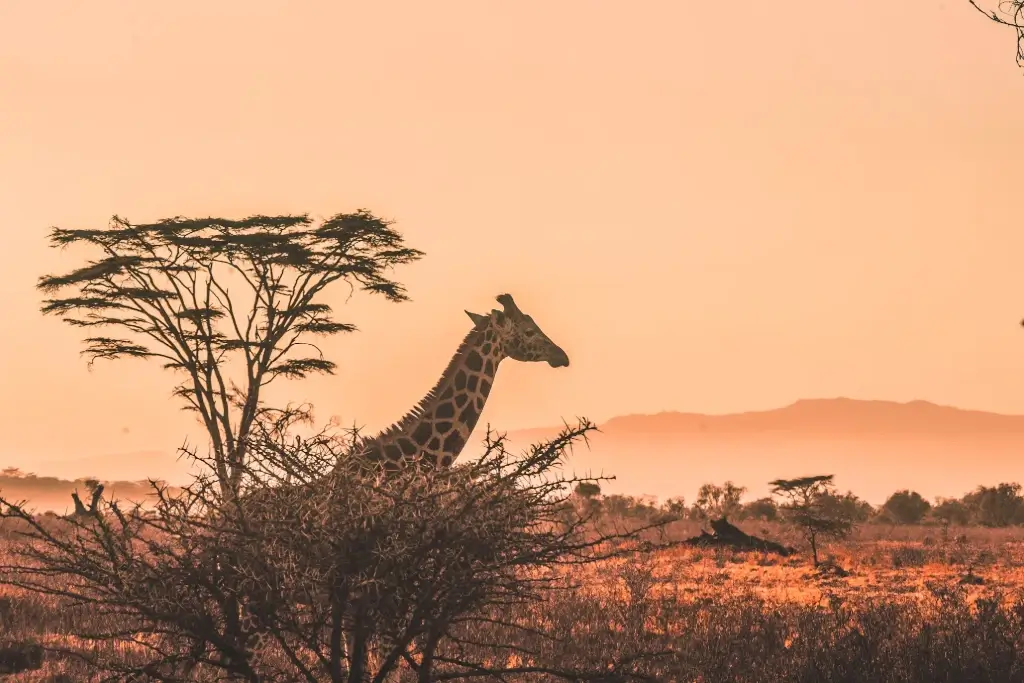
Your safari begins gently and deliberately — not with the intensity of the Serengeti, but with the quiet remarkable beauty of Arusha National Park, 45 minutes from Arusha city, in the shadow of Mount Meru.Arusha NP has no lions. What it has is something rarer in the Northern Circuit: genuine solitude, and the permission to leave the vehicle. A morning walking safari through giraffe country — following animal tracks with a ranger, moving through the yellow fever forest on foot, understanding the land at human pace — is an introduction to safari that the vehicle-only parks cannot offer. In the afternoon, a canoe on the Momella Lakes: drifting at water level past hippos and flamingos, the Kilimanjaro massif visible on the horizon when the clouds permit.
▶ GUIDE TIP: Arusha NP is where we watch guests make the transition from traveller to safari guest — the moment when the stillness of the bush becomes something they can inhabit rather than observe. Starting the itinerary here, rather than immediately at a bigger park, is one of the best decisions we made when designing this circuit.
Arusha → Tarangire
The drive to Tarangire takes approximately 2.5 hours through Maasai country — a landscape of red earth, scattered acacia and cattle moving in long dusty columns. We enter the park by mid-morning.Tarangire in the dry season needs no introduction beyond the first elephant herd you encounter at the river — dozens of them, often hundreds, moving with the unhurried certainty of animals that have owned this water source for longer than any road or lodge has existed here. Today we cover the northern circuit along the Tarangire River: the baobab forests, the kopjes, the tree-climbing lion territories, and the extraordinary birdlife that fills the air from first light.
▶ GUIDE TIP: Two nights in Tarangire — Days 2 and 3 — allows us to go south on the second day, into the Silale and Larmakau swamps where the vehicle tracks disappear and the experience of the park changes completely. This is the Tarangire that virtually no standard itinerary reaches, and it is magnificent.
Tarangire → Tarangire
Our second full day in Tarangire goes south. Most visitors to the park see only the northern section near the gate — the main elephant concentrations, the famous river, the baobab skyline. The southern Tarangire, by contrast, is almost empty of vehicles. The landscape shifts from the baobab country to open floodplain, seasonal swamp and palm-dotted grassland where different species dominate: greater kudu, fringe-eared oryx, eland in herds of sixty or eighty, and a birdlife so rich in the palm thickets that a dedicated birding guide could spend three days here without exhausting the list.This is one of the most satisfying days on the entire extended circuit — the sense of discovery that comes from reaching a part of a famous park that almost no one else has seen.
▶ GUIDE TIP: Night drives are available through select Tarangire lodges — available from inside-park accommodation only. If you are staying inside the park on this itinerary, we book the night drive for the second evening in Tarangire. Bush babies, genets, civets, and occasionally a leopard. The nocturnal Tarangire is a completely different animal.
Tarangire → Manyara / Karatu
The drive from Tarangire to Lake Manyara takes approximately 2 hours through the Rift Valley farmland. We arrive by mid-morning for a full day in the park.Manyara gets half a day on most itineraries. We give it a full one, because the park earns it. The groundwater forest in the morning — forest elephants, colobus monkeys, baboon troops — transitions to the open floodplain and the lake shoreline in the afternoon, where the flamingos feed and the African fish eagles call from the dead trees above the water. An afternoon canoe on the lake (seasonal) or a treetop walk through the forest canopy closes the day before transfer to overnight accommodation near the park.
▶ GUIDE TIP: Ask about the canoe excursion when you book. It is seasonal and must be arranged in advance. When it runs — drifting silently past hippos at water level with the Rift Valley escarpment rising behind you — it is one of the finest two hours on the entire circuit.
Manyara / Karatu → Central Serengeti
The longest transfer day of the circuit and one of the most beautiful. The road climbs into the Ngorongoro highlands through coffee and banana plantation country, past Maasai villages perched on the crater rim, and descends through the Conservation Area onto the Serengeti plain.We pause at Olduvai Gorge — 20 minutes at the site where Louis and Mary Leakey changed our understanding of human evolution — before the final approach to the Serengeti gate. From there, the road becomes a game drive: lions on the kopjes, cheetahs on the plains, the first sightings that tell you the Serengeti has begun. We reach camp by late afternoon with time for a short evening drive before dinner.
▶ GUIDE TIP: Do not underestimate the Olduvai stop. Standing at the spot where the evidence of the earliest human behaviour was found, looking out across the Serengeti plain where our ancestors hunted, is one of the most quietly powerful moments the Northern Circuit offers. We always give it time.
Serengeti → Serengeti
The first full Serengeti day. Dawn departure at 6:00am into the Seronera Valley — the Big Cat Capital of Africa. The morning hours are the most productive: predators moving from overnight hunts, the light extraordinary, the air still cool. We track the resident lion prides, position for leopard sightings in the riverine acacias, and follow cheetah movement on the open plains.A full day drive with a picnic lunch in the bush. Optional hot air balloon safari at dawn (USD 520 per person, book in advance). Optional walking safari (USD 45–60 per person).
▶ GUIDE TIP: The balloon safari, if you are going to do it, should happen on this day — the first full Serengeti morning. The aerial view of the Seronera at sunrise changes the way you read the landscape for the rest of the safari. Every subsequent game drive makes more sense after you have seen the Serengeti from above.
Serengeti → Serengeti
A second full day in the Serengeti, and the day when the park begins to feel genuinely familiar. You know the kopjes now. You know which direction the cheetah was moving yesterday. You have a feeling for the light and the timing and the way the Seronera River draws wildlife to it through the day.This familiarity is where the real safari experience lives — not in the first sighting, powerful as that is, but in the accumulation of knowledge that comes from staying long enough. We use the second day to explore further from Seronera: the western woodlands, the less-visited kopje areas, the stretches of plain where the migration passes in its different seasons.
▶ GUIDE TIP: Ask your guide for a sundowner stop on the second Serengeti evening — parked on a kopje as the sun drops, the plains spreading below, something cold in hand. This is the moment the Serengeti stops being something you are seeing and becomes somewhere you have been.
Serengeti → Ngorongoro Rim / Karatu
Morning game drives in the Serengeti, then midday transfer to Ngorongoro — a 3-hour drive through the Conservation Area highlands. We reach the rim by late afternoon.The next morning: the crater descent. We are at the gate by 6:30am. Five hours on the crater floor — the black rhino, the crater lion prides, the elephant bulls, the flamingo lake, the hippo pool. Lunch in the bush at the pool. Ascent in the early afternoon and transfer to overnight accommodation.Note: if your schedule allows, an extra night on the rim allows for a Highlands walk — Olmoti Crater or Empakaai — on the morning after the crater game drive. We recommend it for guests who want to see Ngorongoro beyond the caldera floor.
▶ GUIDE TIP: The Ngorongoro Highlands walk to Empakaai Crater is one of the most extraordinary experiences on the extended circuit and almost no operator includes it. A 3-hour walk through montane forest to a deep secondary crater with a flamingo lake far below its own rim. We go on request.
Ngorongoro / Karatu → Lake Eyasi
The final full day of the extended circuit, and the one that most guests say they were least expecting and most grateful for. Lake Eyasi sits in the Rift Valley south of Ngorongoro, a shallow alkaline lake surrounded by thorn scrub and the acacia woodland that the Hadzabe — one of the last hunter-gatherer peoples on earth — have called home for ten thousand years. We join a Hadzabe group at dawn for a morning hunt. Bows and arrows, on foot, following tracks through the bush in the early light. Whether the hunt produces game or not is irrelevant — the experience of moving through the landscape on foot with people for whom this is still daily life, at this pace, with this attention, is one of the most grounding things the Northern Circuit offers. In the afternoon, a visit to the Datoga blacksmiths on the lake shore, then the drive back to Karatu or Arusha.
▶ GUIDE TIP: The Hadzabe experience requires sensitivity. We work with community-approved guides who ensure the visit is conducted respectfully and that the economic benefit reaches the community directly. We brief all guests before the visit on appropriate conduct. This is not a cultural performance — it is an encounter between travellers and one of Africa's most remarkable communities.
Karatu / Lake Eyasi → Arusha / KIA
Breakfast and the drive back to Arusha — approximately 2.5 to 3 hours from Karatu. Airport transfer to Kilimanjaro International Airport or your Arusha hotel for onward travel.Ten days. Six parks. A landscape and a collection of experiences that most people who come to East Africa never reach — not because they are inaccessible, but because the standard itinerary doesn't go looking for them. We do.
▶ GUIDE TIP: If your departure is in the afternoon, we can arrange a morning at the Cultural Heritage Centre in Arusha — an excellent Tanzanian art and craft collection that makes for a meaningful final morning before the flight home.
Cost
The Cost Includes
- ✓ Private 4x4 safari vehicle throughout
- ✓ Born East African guide for all 10 days
- ✓ All national park and conservation area fees
- ✓ All accommodation per selected tier
- ✓ Full board — all meals Day 1 dinner to Day 10 breakfast
- ✓ All road transfers between parks
- ✓ Ngorongoro crater descent fees
- ✓ Hadzabe community permit and guided hunt
- ✓ Airport transfers (Arusha / KIA)
- ✓ Drinking water, soft drinks and snacks in vehicle
The Cost Excludes
- ✗ International flights
- ✗ Tanzania e-Visa (USD 50 per person)
- ✗ Travel insurance
- ✗ Optional activities (balloon, walking safari, canoe)
- ✗ Alcoholic beverages
- ✗ Gratuities
- ✗ Personal expenses
Frequently Asked Questions (FAQs)
The 10 day extended Safari adds three significant experiences that the 7 day classic does not include: Arusha National Park on Day 1, a second full day in Tarangire exploring the southern section, and Lake Eyasi with the Hadzabe on Day 9.
Arusha National Park gives you something the larger parks cannot — the permission to leave the vehicle. Walking safaris through giraffe country and canoeing on the Momella Lakes introduce you to the East African wilderness at human pace before the intensity of the Serengeti. It is one of the best decisions we made in building this itinerary.
The second Tarangire day takes guests into the southern swamps — the Silale and Larmakau — which almost no standard itinerary reaches. A completely different landscape from the famous northern section of the park, with different species and genuine solitude.
Lake Eyasi and the Hadzabe is the experience guests most often describe as the one they least expected and most valued. Joining a Hadzabe hunting group at dawn — one of the last hunter-gatherer communities on earth — in the landscape they have occupied for ten thousand years, is unlike anything else the Northern Circuit offers.
Every guest who has done both tells us the same thing: they wish they had done the 10 day itinerary first. That is our honest answer.
The additional three days are not filler. Arusha NP, the southern Tarangire and Lake Eyasi are experiences that stand fully on their own — not extensions of the Serengeti experience but completely different chapters of a broader East African story. Guests who do the 10 day circuit come home with a more complete understanding of Northern Tanzania — its wildlife, its landscapes and its people — than the 7 day circuit can provide.
The cost difference per person is typically USD 1,200–2,000 depending on accommodation tier, spread across three additional days with accommodation, meals, park fees and guiding. In the context of a safari that most guests plan for months or years, this is rarely the deciding factor once guests understand what those three days contain
Arusha National Park is the most underrated park in Tanzania. It sits 45 minutes from Arusha city in the shadow of Mount Meru, covers 552 square kilometres, and offers something genuinely rare on the Northern Circuit: the ability to do a walking safari and a canoe on the same day.
The park has no lions, which is why most operators ignore it. What it has instead is giraffe in exceptional numbers — we walk through giraffe country on foot, which is a completely different experience from viewing them from a vehicle — large buffalo herds, colobus monkeys in the forest canopy, flamingos on the Momella Lakes, and the possibility of seeing Kilimanjaro and Mount Meru simultaneously on a clear morning.
We include it at the beginning of the 10 day circuit because it introduces guests to safari at a gentle pace before the intensity of Tarangire and the Serengeti. By the time the big parks begin on Day 2, guests have already adjusted to the rhythm and the silence of the bush. The walking safari in Arusha NP makes everything that follows better.
The Hadzabe are one of the last hunter-gatherer peoples on earth. They live around Lake Eyasi in the Rift Valley south of Ngorongoro, hunt with bows and arrows, and have occupied this landscape — in essentially the same way — for approximately ten thousand years. They are not a museum exhibit. They are a living community for whom this is daily life.
We join a Hadzabe group at dawn for a morning hunt. On foot, following animal tracks in the early light, through thorn scrub and acacia woodland. Whether the hunt produces game is secondary — the experience of moving through the African bush at hunting pace, with people who read this landscape the way we read a map, is one of the most grounding things the extended circuit offers.
We work exclusively with community-approved guides and brief all guests carefully before the visit. The economic benefit of the visit goes directly to the community. This is a genuine cultural encounter, conducted with respect, and it is one of the most frequently mentioned highlights of the extended circuit in guest feedback.
The nights break down as follows: 1 night in Arusha area (Day 1, after Arusha NP); 2 nights in Tarangire (Days 2–3); 1 night near Lake Manyara (Day 4); 2 nights in the Central Serengeti (Days 5–6); 1 night in Ngorongoro / Karatu (Day 7, with crater drive Day 8); 1 night at Lake Eyasi (Day 8, after crater); and transfer to Arusha on Day 10.
The Serengeti allocation of two full nights feels stretched for a first-time guest used to shorter itineraries, but by the second full day in the Seronera Valley guests consistently say they wish they had more time. Two nights is the minimum we design into any Serengeti stay on this circuit.
Yes — and this is one of our most popular combined itineraries. Resilience Safaris is the safari extension of Resilience Expeditions, which has guided hundreds of climbers to Kilimanjaro’s summit. We design and operate both experiences under the same guiding philosophy.
A typical combined itinerary runs: 7–9 days on Kilimanjaro (depending on route chosen), followed directly by the 10 day Northern Tanzania circuit. Guests arrive at Kilimanjaro International Airport, complete their climb, and transition directly to the safari — the East African experience from its highest point to its most famous plains.
The combination is physically demanding on the Kilimanjaro side. Guests arrive at the safari leg tired and often emotionally full from the summit experience. We design the first safari day at Arusha National Park specifically to allow for this — a gentle reintroduction to movement and wildlife rather than an immediate immersion in the intensity of Tarangire or the Serengeti. Get in touch to discuss the combined itinerary in detail.
Like the 7 day classic, this circuit runs year-round. The same seasonal logic applies: dry season (June–October) for maximum game viewing and the Migration in its northern phase; calving season (December–March) for the Ndutu option and extraordinary predator activity; green season (April–May) for solitude, exceptional birding and the most accessible prices.
The Lake Eyasi and Hadzabe experience is available year-round. The Arusha NP canoe is seasonal — dependent on water levels — and we always check availability when building itineraries for specific dates.
For the 10 day circuit specifically, we find that the green season (April–May) is particularly rewarding. The parks are almost empty of other vehicles, the Serengeti is extraordinarily lush, and the Hadzabe hunt takes on a different character in the landscape after the rains. Accommodation prices are at their most competitive during this period.
The game drives are conducted from a 4×4 vehicle and require no physical exertion. The transfer days involve several hours of driving, which can be tiring — we break all long transfers with game drives, stops and picnic lunches.
The walking safari in Arusha National Park (Day 1) is a moderate walk of 2–3 hours on even terrain. Good walking shoes are sufficient. The Hadzabe hunt (Day 9) involves walking for 2–3 hours in scrub country — again, moderate fitness is adequate.
Guests with mobility limitations should discuss their specific requirements with us when enquiring. We have adapted the itinerary successfully for guests with a range of physical needs — the walking elements can be modified or replaced with vehicle-based alternatives in Arusha NP.
We offer three tiers across the itinerary — budget, mid-range and luxury — with the option to mix tiers between parks based on your preferences and budget. Many guests, for example, choose mid-range accommodation in Manyara and Ngorongoro but upgrade to a premium inside-park lodge for their Serengeti nights.
Budget tier uses comfortable tented camps and guesthouses, mostly outside park boundaries, with full board and en-suite facilities. Mid-range lodges are well-appointed, many inside or directly adjacent to park boundaries, with swimming pools and higher levels of service. Luxury tier uses exclusive small camps and lodges inside parks — some with fewer than ten tents — offering a level of privacy, service and location that transforms the game-viewing experience.
We provide specific accommodation recommendations for each tier when we send your personalised quote, matched to your travel dates and the availability on those dates.
Yes. We have designed family safaris on the extended circuit for children from age 5 upward, and the itinerary adapts well to family travel. The Arusha National Park opening day is particularly well-suited to younger guests — the walking safari and canoe are engaging for children in a way that a full-day vehicle game drive in a larger park sometimes is not.
The Hadzabe experience on Day 9 is appropriate for children of 8 and above — younger children may find the length of the morning walk challenging. We can adapt the Lake Eyasi day for families with very young children, replacing the hunt with a shorter cultural visit.
Most Northern Circuit lodges offer family rooms or interconnecting tents. Age restrictions vary by lodge — we check these specifically when building family itineraries. Tips: pack children’s binoculars, a wildlife identification book, and a small notebook for their own game drive records. Engaged children make the best safari guests.