- 3
- 1
- 2
- 2
- 2
- 2
- 2
Discover Tarangire National Park, famous for its large elephant herds, ancient baobab trees, and diverse wildlife in a peaceful, scenic setting.
Ancient baobabs, elephant herds and a wilderness that feels genuinely untouched
There are parks in East Africa that feel like they are showing you something. And then there is Tarangire, which feels like it doesn’t care whether you’re there or not — which is exactly what makes it one of our favourites.
Tarangire sits to the south of Lake Manyara, running along the ancient Tarangire River in a landscape dominated by the baobab — the great, gnarled, thousand-year-old trees that look as though they were put in the ground upside down, their roots reaching for the sky. In the dry season, when the surrounding land parches and the other water sources disappear, the Tarangire River becomes the last standing water for hundreds of kilometres. And the wildlife comes to it in extraordinary numbers.
In July and August, Tarangire hosts one of the largest elephant concentrations in Africa. Hundreds of them. Moving in family groups along the river bank, digging for water in the dry riverbed, crossing in long single-file lines through the baobab forest. It is a scene from another world — and it is entirely, reliably real.
| Tarangire doesn’t announce itself. It simply reveals itself — slowly, completely, and on its own terms. |
| TARANGIRE — WILDLIFE LAYER BY LAYER |
Tarangire’s elephant population is one of the most studied in Africa. The herds here are large, multigenerational and deeply social. Watching a family group at the river — the matriarch leading, the calves staying close, the teenage bulls testing their strength at the edges — is to watch animal society functioning at its most complex and moving. We never rush past the elephant sightings here. We stay. We watch. There is always more happening than is immediately visible.
Tarangire has a small but documented population of lions that regularly climb the park’s large acacia and baobab trees — a behaviour seen reliably in only a handful of locations worldwide. Spotting a lion draped across a branch ten feet above the ground, entirely relaxed, is the kind of image that doesn’t need a caption.
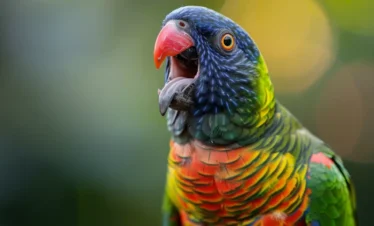
Tarangire is one of the finest birding parks in East Africa. Over 550 species have been recorded here — the yellow-collared lovebird flashing through the baobabs, the enormous kori bustard picking across the open ground, the lilac-breasted roller burning colour into the blue sky. Birding guests often find Tarangire the highlight of the circuit.
| Elephant | Dry season concentrations of hundreds along the Tarangire River. Among the best in Africa. |
| Tree-climbing Lion | One of only a few locations in Africa where this behaviour is documented. Remarkable to witness. |
| Oryx & Eland | Tarangire’s dry, open terrain suits these magnificent dry-country antelope beautifully. |
| Python | The riverine woodland hides Africa’s largest snake. Not always seen, but always worth looking for. |
| Birds — 550+ species | One of Tanzania’s premier birding destinations, with an extraordinary dry-country list. |
| TARANGIRE — THE LESSER-VISITED SOUTH |
Most visitors to Tarangire stay in the northern part of the park, close to the gate, where the wildlife concentrations are highest in the dry season. Very few continue south into the Silale and Larmakau swamps — a landscape of palm-dotted open country where the feel of the park changes completely, the vehicle tracks thin out, and you can drive for hours without seeing another soul. We go south. We always go south.
| RESILIENCE INSIDER TIP
The dry season elephant gatherings at Tarangire are most dramatic at the river crossings in the early morning. Get there before 7am, position downriver from the main crossing point, cut the engine, and wait. Within thirty minutes you will likely have elephants all around you, and the silence — broken only by their rumbling and the sound of river water — is something that stays with you. |
Discover Tarangire National Park, famous for its large elephant herds, ancient baobab trees, and diverse wildlife in a peaceful, scenic setting.