- 3
- 1
- 2
- 2
- 2
- 2
- 2
There is a moment, usually on your first morning in the Serengeti, when you drive out of camp and the land just opens up. No trees. No hills. Just plains stretching to every horizon, impossibly vast, impossibly alive. Wildebeest dotting the distance. A dust cloud moving on the far edge. A pair of lions flat on a kopje, barely lifting their heads as you pass.
This is the Serengeti. And nothing you have read or watched quite prepares you for the scale of it.
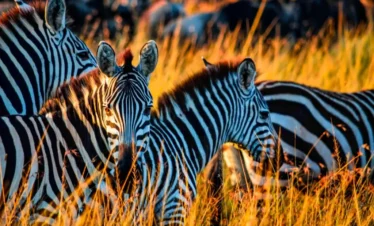
Covering nearly 15,000 square kilometres of open savanna, woodland and grassland, the Serengeti is Tanzania’s oldest and most famous national park. It is also the stage for the Great Migration — the annual movement of over 1.5 million wildebeest and hundreds of thousands of zebra and gazelle across the plains in an endless, instinct-driven cycle of grass and rain. To witness it is to be reminded, viscerally, that you are a very small part of a very large world. That reminder is exactly what most of our guests are looking for.
| The Serengeti doesn’t perform for you. It simply continues — and you are permitted, briefly, to watch. |
| THE SERENGETI — WILDLIFE LAYER BY LAYER |
The Migration is the reason many people come to the Serengeti, and it delivers on every promise. Over a million wildebeest move in a continuous clockwise circuit around the Serengeti ecosystem — from the short grass plains of the south in the calving season, north through the central Seronera valley, and up to the Mara River crossings in the far north between July and October, where crocodiles wait in the shallows and the drama is absolute.
But here is what most itineraries don’t tell you: the Migration is not a single event. It is a year-round phenomenon, and knowing where the herds are at any given time — which requires decades of on-the-ground knowledge — is the difference between a good safari and an extraordinary one. We know where they are. We always know where they are.
The Serengeti has one of the highest densities of predators anywhere in Africa. Lions are seen on almost every game drive — large prides with cubs, young males sparring at dawn, lionesses hunting at dusk. Leopards haunt the riverine trees of Seronera, one of the most reliable spots on the continent to find them. And cheetahs — those impossibly elegant, impossibly fast cats — are regularly seen hunting on the open plains, where they need the visibility as much as you do.
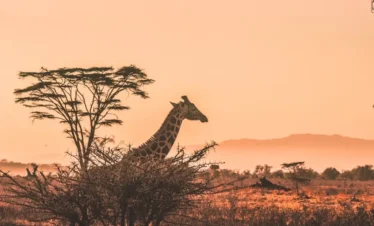
The Serengeti is also home to vast herds of elephant, giraffe moving through the acacia woodland like slow amber giants, hyena clans with complex social hierarchies that would take a lifetime to fully understand, and a birdlife so rich — over 500 species — that dedicated birding safaris here can run for a week without repetition.
| Lion | One of the highest pride densities in Africa. Found throughout the park, most reliably in the Seronera area. |
| Leopard | Seronera’s riverine woodland is among the best leopard habitat on earth. Patient early mornings reward. |
| Cheetah | The open southern plains offer exceptional cheetah sightings, especially during calving season. |
| Wild Dog | Rare and nomadic, but present. A sighting here is one of the great privileges of East African safari. |
| Wildebeest & Zebra | Year-round presence across the ecosystem. The Migration concentrates them in extraordinary numbers. |
SERENGETI — BEST TIME TO VISIT
| Calving Season | Jan — Mar | The southern plains fill with newborn wildebeest. Predator activity is at its highest. Cheetah sightings exceptional. |
| Long Rains | Apr — May | The park empties of tourists. The land turns green. Game is dispersed but the atmosphere is extraordinary. |
| Dry Season | Jun — Oct | The Migration moves north. River crossings begin. Wildlife concentrates around water. Peak safari season. |
| Short Rains | Nov — Dec | Herds return south. Birdlife at its richest. Fewer visitors. One of our favourite times to be here. |
| RESILIENCE INSIDER TIP
The northern Serengeti around Lobo and Kogatende is far less visited than Seronera, yet sits directly in the path of the Migration’s northern push. In July and August, you can watch river crossings with a fraction of the vehicles present at the main crossing points. Position matters more than timing — and we know exactly where to position you. |